





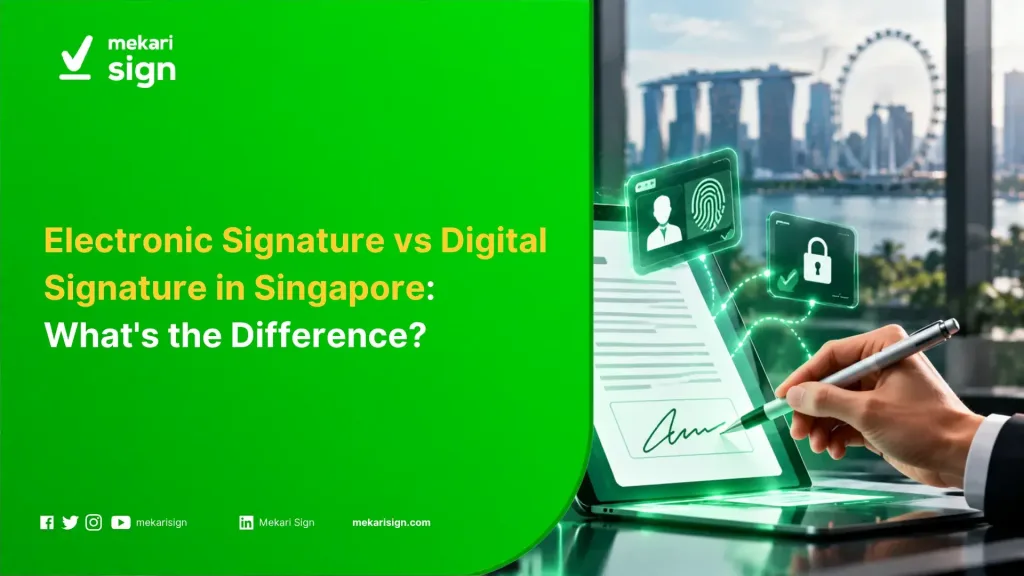
- Electronic signatures are a broad category of electronic methods used to indicate a person’s intention to sign or approve a document.
- Digital signatures use cryptographic technology and digital certificates to link a signer to a document and detect changes made after signing.
- Singapore’s Electronic Transactions Act (ETA) recognises electronic signatures and sets specific conditions for secure electronic signatures.
- The right signing method depends on the document, required identity assurance, security controls, and whether the transaction involves parties across jurisdictions.
- Singapore businesses can use Mekari Sign to manage digital signing workflows with Singpass verification and trusted certificate infrastructure.
Electronic signatures are now used for many business activities in Singapore, from routine approvals to commercial agreements. The act of signing may look similar across platforms, but the technology and level of assurance behind the signature can differ.
The distinction becomes more important when a document contains sensitive information, carries significant business value, or involves parties in different countries. In these cases, businesses may need stronger identity verification, document integrity controls, and clearer evidence of the signing event.
Singapore’s Electronic Transactions Act provides the legal framework for electronic records, signatures, and contracts. Understanding how electronic signatures differ from digital signatures helps businesses choose a signing method that matches the transaction.
What is an electronic signature in Singapore?
An electronic signature is electronic information used to indicate a person’s intention to sign an electronic record. Under Singapore’s Electronic Transactions Act 2010, a signature requirement can be fulfilled through an electronic method when the relevant conditions are met.
Electronic signatures can take different forms depending on the signing process. A person may type their name, draw a signature on a touchscreen, click an acceptance option, or use an electronic signature platform.
IMDA’s Electronic Transactions Act guidance describes electronic signatures as records of a person’s intention or consent and lists examples such as a digitised handwritten signature, a stylus signature, an acceptance checkbox, and an electronic signature software option.
The level of assurance can vary between these methods. For business use, the relevant question is how the signing process identifies the signer, protects the document, and records evidence of the transaction.
Read more: Digital Signatures in Singapore: What Businesses Should Know
What is a digital signature in Singapore?
A digital signature is a type of electronic signature that uses cryptographic technology to associate a signer with a digital document. It relies on a private key to create the signature and a corresponding public key to verify it. NIST’s definition of digital signature describes this as an asymmetric key operation that provides authenticity and integrity protections.
The cryptographic process also helps detect changes made to a document after it has been signed. When the signed data no longer matches what was originally signed, the verification result can show that the document has been altered.
Digital certificates add another layer to this process by linking a public key with an identified person or organisation. In Singapore, IMDA’s key concepts for digital signatures and certification authorities explain how certification authorities issue digital certificates that support trust in digital signatures.
Singapore’s ETA also defines the conditions for a secure electronic signature. These conditions include uniqueness to the signer, the ability to identify the signer, control by the signer, and a link to the electronic record that causes the signature to become invalid if the record is changed.
Electronic signature vs digital signature: What’s the difference?
| Consideration | Electronic Signature | Digital Signature |
|---|---|---|
| Scope | Broad category covering different electronic signing methods | Specific signing method based on cryptographic technology |
| Identity assurance | Depends on the signing method and authentication controls | Uses digital certificates and cryptographic credentials |
| Document integrity | Depends on the technology and controls used | Cryptographic verification can detect changes to signed content |
| Trust model | Varies by implementation and provider | Uses certificate-based trust infrastructure |
| Typical business use | Routine approvals, acknowledgements, and agreements | Documents requiring stronger identity and integrity controls |
The difference is mainly about the method used to create and verify the signature. An electronic signature can refer to a wide range of signing methods, while a digital signature uses cryptography and certificate-based credentials to provide additional assurance.
That does not mean every business document needs a digital signature. The required level of assurance depends on the transaction, the risks involved, and the evidence the business needs to retain.
For a deeper explanation of the infrastructure behind certificate-based signing, see this guide to Certificate Authority.
Which signing method should a Singapore business use?
The choice should start with the document and the transaction. A routine internal approval may prioritise ease of use and workflow, while a sensitive commercial agreement may require stronger controls around identity, document integrity, and auditability.
| Business situation | What to consider |
|---|---|
| Routine internal documents | Ease of signing, approval workflow, and record keeping |
| Customer or supplier agreements | Signer identity, document integrity, and auditability |
| Sensitive or high-value agreements | Identity assurance, certificate-based signing, security controls, and evidence |
| Cross-border agreements | Certificate trust, recipient compatibility, local requirements, and applicable laws |
Cross-border agreements require additional checks because the document may move between different legal and technical environments. A business may need to consider how the recipient verifies the signature and whether the signing credentials are recognised in the relevant context.
Read more: What is a Certificate Authority?
What does Singapore law say about electronic signatures?
Singapore’s Electronic Transactions Act 2010 provides legal recognition for electronic records, signatures, and contracts. The current version of the Act covers requirements for writing, signatures, retention of electronic records, contract formation, and secure electronic signatures.
Section 8 addresses requirements for signatures. Section 18 sets out when an electronic signature can be treated as a secure electronic signature, including requirements relating to the signer’s identity, control of the signature process, and the link between the signature and the electronic record.
The ETA also contains excluded matters, so businesses should check whether the transaction falls within the scope of the Act before relying on its general electronic transaction provisions. The Act gives effect to electronic contracting while allowing parties to determine how electronic records and signatures are used within the legal framework.
IMDA’s ETA guidance also notes that electronic signatures can be used across common business functions such as sales, procurement, human resources, and finance and accounts.
What should Singapore businesses check before choosing a signing method?
Start with the transaction. Identify what is being signed, who is signing it, whether the document contains sensitive information, and what could happen if the identity of the signer or the integrity of the document is disputed.
Next, examine how the signing solution verifies identity. Businesses should understand whether the process uses email, account authentication, government-backed identity verification, digital certificates, or another method.
Document integrity is another important consideration. For documents that may need stronger technical assurance, businesses should be able to verify whether the signed content has changed and retain evidence of the signing event.
For documents that cross borders, check the trust environment on both sides. This includes the certificate infrastructure, recipient compatibility, local requirements, and how the completed document will be verified after signing.
Read more: How to Verify a Digital Signature
How does Mekari Sign support Singapore businesses?
Mekari Sign supports electronic document workflows for businesses in Singapore. The Singapore platform supports Singpass verification and signing workflows, while its digital signing infrastructure also uses trusted certificates for document signing.
For documents that need broader recipient compatibility, the platform uses certificates from GlobalSign that are recognised in the Adobe Approved Trust List. Adobe’s current AATL member list explains how trusted certificate providers are used to support certificate-based digital signatures in Adobe products.
Mekari Sign also supports organisations working across Southeast Asia through local and regional trust infrastructure. The setup can be relevant when a business manages documents between Singapore and other markets with different signing or identity requirements.
The right signing method depends on the document and the level of assurance required. Businesses can assess the transaction first, then choose a signing process that provides the appropriate identity, integrity, and trust controls.
For Singapore businesses that need a connected workflow for document preparation, signing, and execution, Mekari Sign brings these activities into one digital platform.