






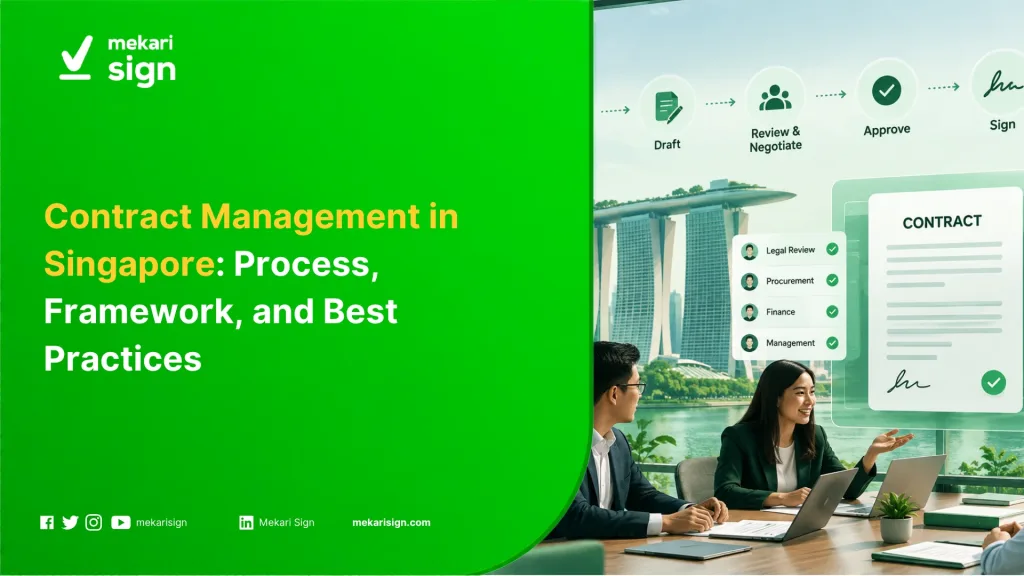
- Contract management covers the full process of creating, reviewing, approving, signing, monitoring, renewing, and closing business contracts.
- The contract management process continues after signing, with teams still responsible for tracking obligations, deadlines, payments, deliverables, and contract changes.
- A clear contract management workflow helps Legal, Procurement, Finance, and business teams understand who owns each stage and what needs to happen next.
- A practical contract management framework sets responsibilities for contract ownership, document control, obligations, risk, performance, and key dates.
- Businesses in Singapore can manage contract and document workflows digitally with Mekari Sign, including electronic signing as part of the contract lifecycle.
A contract can take days or weeks to negotiate, yet signing it is only one point in its lifecycle. After execution, teams may still need to monitor payment terms, delivery commitments, service levels, renewal dates, and other obligations.
Contract management provides a structured way to handle that work. It covers the lifecycle from the initial request and drafting stage through review, approval, execution, performance monitoring, renewal, amendment, or close-out.
This guide explains what contract management is, how the contract management process works, how to build a practical framework, and the practices businesses can use to manage agreements more consistently.
What Is Contract Management?
Contract management is the process of creating, reviewing, approving, executing, monitoring, and maintaining contracts throughout their lifecycle. It brings together the people, processes, documents, and controls involved in managing an agreement.
Several functions can be involved in the same contract. Legal may review contractual terms, Procurement may manage supplier agreements, Finance may monitor payment conditions, and business teams may track whether products or services meet the agreed requirements.
The work continues after signing. Teams need to know which contracts are active, who owns each agreement, which obligations are due, and when an action such as renewal, amendment, or termination needs to happen.
Why Is Contract Management Important?
A growing business can have hundreds or thousands of agreements covering suppliers, customers, employees, partners, and service providers. The information inside those contracts can affect pricing, payments, delivery, responsibilities, service levels, and renewal decisions.
Problems often appear between departments. Legal may have the final negotiated version, Procurement may be monitoring the supplier, Finance may be working from the payment terms, while the business owner may be the person who knows whether the supplier is meeting its commitments.
A consistent contract management process gives these teams a shared way to work with the same agreement. It also makes it easier to identify what needs attention before a deadline, obligation, or renewal decision becomes urgent.
What Is the Contract Management Process?
The contract management process follows an agreement from the initial request through completion, renewal, amendment, or termination. The exact stages vary between organisations, but most business contracts pass through several common steps.
1. Contract Request and Planning
The process usually starts when a business needs to establish an agreement with another party. Procurement may require a supplier contract, while a Commercial team may need an agreement before starting a customer engagement.
The business identifies the purpose of the contract, the parties involved, expected deliverables, commercial requirements, and internal stakeholders who need to participate.
It also helps to establish who will own the contract once it is signed. That person does not need to handle every stage, but should know what the agreement requires and when action is needed.
2. Contract Drafting
The agreement is prepared using an approved template or a new draft. Depending on the contract, it may cover pricing, payment terms, delivery requirements, service levels, confidentiality, liability, termination, renewal, and other commercial conditions.
Using standard templates and approved clauses can make drafting more consistent when teams manage similar agreements repeatedly.
3. Contract Review and Negotiation
The draft moves through internal review and may go through several rounds of negotiation with the other party.
Legal teams may review contractual provisions and risk, while Procurement may focus on supplier terms, pricing, and commercial commitments. Business stakeholders can check whether the agreement reflects what the team actually needs to deliver or receive.
Version control matters here. When several people are reviewing the same agreement, the team should be able to distinguish the latest draft from earlier versions and see which changes were made.
4. Approval
Once the commercial and contractual terms are agreed, the contract goes through the required internal approvals.
The approval path may depend on factors such as contract value, business unit, agreement type, or the level of risk involved. A defined workflow helps identify the right approvers and keeps a record of decisions before execution.
5. Contract Execution
After approval, the parties sign the agreement. An electronic contract signature can be used where the transaction and signing method meet the applicable requirements.
Singapore’s Electronic Transactions Act 2010 provides a legal framework for electronic records, electronic signatures, and the formation and validity of electronic contracts. The Act also contains exclusions and other conditions that organisations need to consider.
For example, section 8 addresses situations where a signature is required, while section 11 addresses the formation and validity of contracts through electronic communications. The First Schedule sets out matters excluded from specific provisions of the Act.
Businesses using electronic signatures can therefore assess the document and transaction first, then select a signing method that fits the applicable requirements. For an overview of how electronic signatures work, see our digital signature guide.
6. Contract Performance and Obligation Monitoring
Contract management continues after execution.
Teams may need to monitor supplier performance, service levels, delivery milestones, payment obligations, insurance requirements, reporting requirements, or other commitments defined in the agreement.
A supplier contract, for example, may specify a service level, reporting schedule, and notice period. Procurement may monitor supplier performance while Finance checks invoices against agreed payment terms and the business owner confirms whether the service is meeting expectations.
Singapore’s Ministry of Finance describes contract management after procurement award in similar terms. Government agencies are expected to ensure goods or services meet contractual requirements, monitor costs, document key considerations and decisions, and address potential contractual issues.
7. Renewal, Amendment, or Termination
As the contract approaches its end date, the business may need to renew, renegotiate, amend, or terminate the agreement.
This is where notice periods become particularly important. A contract that requires 60 or 90 days’ notice should be reviewed well before the expiry date, especially when Procurement needs time to renegotiate terms or assess alternative suppliers.
The decision should also consider the agreement’s performance. A renewal may make sense when service levels, pricing, and business requirements remain aligned. A contract that consistently misses its commitments may require renegotiation or replacement.
8. Contract Close-Out
Some contracts eventually reach the end of their lifecycle.
Close-out may involve confirming that outstanding obligations have been completed, resolving open issues, processing final payments, and retaining the required records.
For agreements that are renewed or replaced, information from the previous contract can also help the business compare terms, review supplier performance, and prepare for the next negotiation.
What Does a Contract Management Workflow Look Like?
A contract management workflow defines how an agreement moves between people, teams, and stages.
A typical workflow may look like this:
Contract request → Drafting → Review → Negotiation → Approval → Signature → Obligation monitoring → Renewal or close-out
Each stage can have a different owner. Legal may handle contractual review, Procurement may coordinate supplier negotiations, Finance may review commercial terms, and the business owner may take responsibility for performance after execution.
A clear workflow also makes the current status easier to see. An agreement waiting for approval should not be treated the same way as one that has already been signed and is being monitored.
What Is a Contract Management Framework?
A contract management framework defines how an organisation governs contracts across their lifecycle. It provides a common structure for deciding who is responsible, what needs to be tracked, and how issues should be handled.
| Area | What it covers |
|---|---|
| Governance | Roles, responsibilities, approval authority, and escalation |
| Contract lifecycle | Processes from request and drafting through renewal or close-out |
| Document control | Contract versions, final agreements, amendments, and related records |
| Obligations | Deliverables, payments, service levels, deadlines, and other commitments |
| Risk management | Contractual risks, exceptions, disputes, and escalation procedures |
| Performance | Supplier or counterparty performance against agreed requirements |
| Reporting | Contract status, upcoming deadlines, obligations, and other information |
The framework should reflect how the organisation actually operates. A business with a large supplier base may put more emphasis on Procurement and supplier performance, while a professional services firm may focus more on customer agreements, deliverables, and renewals.
What Are the Benefits of Contract Management?
Better Contract Visibility
Teams can see which contracts are active, where they sit in the lifecycle, and who is responsible for them.
This matters when several departments work with the same agreement. A central contract record reduces the need to search through individual inboxes or ask colleagues for the latest copy.
Fewer Missed Deadlines
Contracts often include renewal dates, notice periods, payment milestones, delivery dates, and other deadlines.
Tracking these dates gives responsible teams time to review the agreement and decide what action to take.
Better Control of Contract Obligations
A signed contract creates commitments that still need to be delivered. Monitoring obligations helps teams check whether services, payments, deliverables, reporting, and other requirements are being handled according to the agreed terms.
More Consistent Contract Processes
Standard workflows give Legal, Procurement, Finance, and business teams a common way to request, review, approve, execute, and manage contracts.
That consistency becomes more valuable as contract volume grows or responsibility is shared across several offices and functions.
Easier Access to Commercial Information
A well-organised contract record can make everyday questions easier to answer. Teams can check which supplier agreements are active, what payment terms were agreed, when a contract expires, or who owns the relationship without reconstructing the information from separate emails and spreadsheets.
What Is Contract Management in Procurement?
Procurement and contract management are closely connected because many sourcing and purchasing activities result in supplier agreements that need to be managed after award.
Procurement may cover sourcing, supplier evaluation, negotiation, and selection. Contract management focuses on what happens to the agreement after those commercial terms have been agreed and the contract has been executed.
For example, Procurement may negotiate supplier pricing, service levels, and delivery requirements. Once the agreement is signed, the business still needs to monitor performance, verify invoices, manage changes, and prepare for renewal.
Vendor contract management therefore needs input from more than Procurement alone. Finance may check billing, Operations may monitor delivery, and the business owner may assess whether the supplier is meeting the agreed requirements.
What Should a Contract Management Strategy Include?
A contract management strategy defines how an organisation manages its agreements consistently.
Not every contract needs the same level of oversight. Organisations can classify agreements based on contract value, risk, duration, business impact, or the type of counterparty involved.
A high-value supplier agreement may require more frequent performance reviews and senior approvals than a low-risk operational contract.
The strategy should also assign ownership. Someone should know who is responsible for monitoring the contract, responding to issues, reviewing upcoming dates, and deciding what should happen when the agreement approaches renewal.
What Are the Best Practices for Contract Lifecycle Management?
Standardise Where It Makes Sense
Use approved templates, clauses, review procedures, and approval rules for contracts that follow similar patterns.
Standardisation reduces unnecessary variation while leaving room for agreements that require specific commercial or legal terms.
Define Contract Ownership
Every active contract should have a responsible owner.
That person does not need to perform every task, but should know what the agreement requires, which teams are involved, and when action is needed.
Keep the Signed Version Easy to Identify
Teams should be able to distinguish the executed contract from drafts and previous versions.
Amendments, addenda, and supporting documents should also be associated with the relevant agreement so that the contract record remains complete.
Track Obligations and Important Dates
Contract value alone does not show everything that requires attention.
Depending on the agreement, teams may need to monitor renewal dates, notice periods, milestones, payments, service-level commitments, insurance certificates, reporting requirements, and other contractual obligations.
Review Contract Performance Regularly
For supplier and service agreements, regular performance reviews can help teams identify issues while there is still time to address them.
The review can cover service levels, delivery performance, costs, unresolved issues, and other requirements defined in the agreement.
What Role Can AI Play in Contract Management?
AI can assist with contract management because many activities involve reviewing, comparing, and extracting information from large amounts of contract text.
Depending on the technology used, AI can help identify clauses, extract key terms, compare versions, summarise agreements, or flag information for human review.
These applications can reduce repetitive document work. Contract interpretation, negotiation decisions, and risk assessment still require appropriate human judgement, particularly when the commercial or legal context matters.
What Are Some Examples of Contract Management?
Vendor Contract Management
A vendor contract may require Procurement to monitor pricing, delivery commitments, service levels, insurance requirements, and renewal dates. Finance may also need to verify invoices against the agreed payment terms.
Employment Contract Management
An employment contract may include terms relating to compensation, working arrangements, confidentiality, benefits, and termination. HR is typically responsible for maintaining the relevant records and coordinating actions required under the agreement.
Customer Contract Management
A customer contract may require Commercial, Finance, and Operations teams to monitor billing terms, delivery milestones, service commitments, and renewal conditions.
The details differ between agreements, but the management process follows a similar pattern: establish ownership, keep the contract accessible, monitor the required actions, and respond when the agreement calls for a decision.
Contract Management in Singapore: What Should Businesses Keep in Mind?
Singapore businesses may manage contracts across Legal, Procurement, Finance, Sales, HR, and Operations. The same agreement can therefore involve different owners at different points in its lifecycle.
The Electronic Transactions Act 2010 provides the legal framework for electronic records, signatures, and contracts in Singapore. Its current version includes provisions covering legal recognition, writing requirements, signatures, retention, and contract formation, alongside specific exclusions.
Businesses should therefore assess the type of document and transaction before deciding how it should be executed electronically. The parties can also agree to additional requirements regarding the form or authentication of a transaction under the Act.
For procurement teams, the post-award stage also deserves attention. Singapore’s Ministry of Finance identifies contract management as the point where agencies monitor delivery against contractual requirements, costs, documentation, and potential contractual issues.
Manage the Contract Lifecycle More Consistently
Contract management works across the full lifecycle of an agreement. Legal, Procurement, Finance, HR, and business teams may each take responsibility at different stages, but they still need access to the same contract information and a clear view of what needs to happen next.
For businesses in Singapore that want to bring these document workflows together, Mekari Sign supports contract and signing workflows within one digital platform.